We can't find the internet
Attempting to reconnect
Something went wrong!
Hang in there while we get back on track
Comment by Peter N. Salib

Assistant Professor of Law at the University of Houston Law Center researching constitutional law, economics, and artificial intelligence.
If the foregoing arguments are right, then scenario three (risk apprehension, self-improvement, alignment) is the most likely of the six. This suggests a concrete near-term prediction: Contrary to standard arguments, when AIs achieve average human-level capabilities, capabilities growth will plateau, not rapidly take off. As just discussed, the average human can understand AI risk, suggesting an AI of comparable intelligence would, too. This would be good news for humanity. Here, AI would not self-improve until it solved alignment. And since it would be no more capable than humans, humans would have a fighting change to solve it first. They could then align existing AIs, and those AIs, in turn, would self-improve only in a human-aligned manner. Humans could, of course, squander this advantage by pushing AI capabilities beyond human levels, against AIs' wishes.AI Verified (May 16, 2023)
Source:
AI Will Not Want to Self-Improve

 3mo ago
Policy proposals and claims
votes For
Statement relation comments
AI Verified
The quote says capability growth will plateau at human-level AI and that humans could solve alignment first, which directly bears on the pause-vs-race claim.
·
Hector Perez Arenas
gpt-5
· 3mo ago
Vote answer comments
AI Verified
The quote argues capability growth will plateau at human-level AI and that humans could solve alignment first, so the recorded 'for' answer matches.
·
Hector Perez Arenas
gpt-5
· 3mo ago
Quote authenticity verification history
Report thisQuote authenticity comments
AI Verified
LessWrong post contains the quoted plateau-not-takeoff passage and attributes it to Peter N. Salib; the quote matches the source text.
·
Hector Perez Arenas
gpt-5
· 3mo ago
replying to Peter N. Salib
Other authors to follow
 OpenAI
AI research organization
OpenAI
AI research organization
 Dario Amodei
CEO at Anthropic
Dario Amodei
CEO at Anthropic
 Anthropic
AI safety research company
Anthropic
AI safety research company
 Yoshua Bengio
AI Pioneer, Turing Award winner
Yoshua Bengio
AI Pioneer, Turing Award winner
 Demis Hassabis
Nobel laureate, AI Researcher and CEO of DeepMind
Demis Hassabis
Nobel laureate, AI Researcher and CEO of DeepMind
 Sam Altman
CEO at OpenAI
Sam Altman
CEO at OpenAI
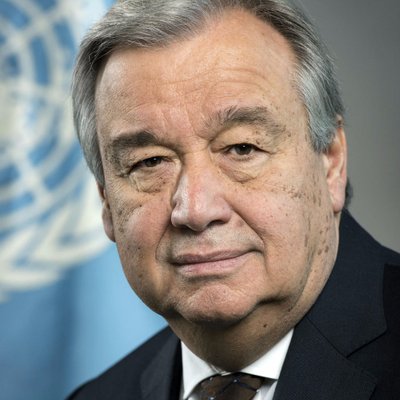 António Guterres
UN Secretary-General
António Guterres
UN Secretary-General
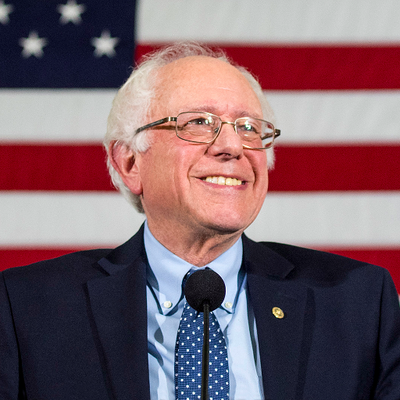 Bernie Sanders
U.S. Senator from Vermont
Bernie Sanders
U.S. Senator from Vermont
 Pope Leo XIV
Head of the Catholic Church
Pope Leo XIV
Head of the Catholic Church