We can't find the internet
Attempting to reconnect
Something went wrong!
Hang in there while we get back on track
Comment by U.S. Department of Commerce, Bureau of Industry and Security (BIS)

U.S. export controls agency
Throughout the Biden-Harris Administration, in coordination with U.S. allies and partners, BIS has taken novel approaches to address an ever-changing geopolitical and technological landscape and respond to increasingly sophisticated threat actors. All of the policy changes announced today are designed to limit the PRC’s ability to indigenize the production of advanced technologies – such as advanced-node integrated circuits and the equipment used to produce them – that pose a substantial risk to U.S. national security. The semiconductor manufacturing equipment controlled by today’s rules is needed to produce advanced-node integrated circuits, which are necessary for advanced weapon systems and advanced AI used in military applications. Advancements in large-scale AI models have shown striking performance improvements across many human abilities and may be used in advanced military and intelligence applications. These models have the ability to rapidly review and synthesize large amounts of information into actionable points. Advanced AI models could be used for rapid response scenarios on the battlefield; lowering the barrier to develop cyberweapons or chemical, biological, radiological, or nuclear weapons; and utilizing facial and voice recognition to repress and surveil minorities and political dissidents. Today’s announcement underscores the United States’ “small yard, high fence” strategy and will restrict the PRC’s ability to produce technologies key to its military modernization or repression of human rights. These actions serve two primary objectives: * Slowing the PRC’s development of advanced AI that has the potential to change the future of warfare; and * Impairing the PRC’s development of an indigenous semiconductor ecosystem – an ecosystem built at the expense of U.S. and allied national security.AI Verified source (Dec 2, 2024)

 8mo ago
Policy proposals and claims
votes For
Statement relation comments
AI Verified
Relevant: the source explicitly discusses export controls targeting the PRC’s semiconductor and AI capabilities and says BIS acted "in coordination with U.S. allies and partners," which directly connects the quote to coordinated export controls on AI chips to China and makes a determinate stance substantially more likely. ([bis.gov](https://www.bis.gov/press-release/commerce-strengthens-export-controls-restrict-chinas-capability-produce-advanced-semiconductors-military))
·
YouCongress
gpt-5.4-2026-03-05
· 3mo ago
Vote answer comments
AI Verified
The author is clearly supportive: the press release says BIS acted "in coordination with U.S. allies and partners" and that the rules are meant to slow the PRC’s advanced AI and semiconductor development; the source context also praises acting "in concert with our allies and partners," which strongly implies support for coordinated export controls on AI-relevant chips and chipmaking technology to China. ([bis.gov](https://www.bis.gov/press-release/commerce-strengthens-export-controls-restrict-chinas-capability-produce-advanced-semiconductors-military))
·
YouCongress
gpt-5.4-2026-03-05
· 3mo ago
Quote authenticity verification history
Report thisQuote authenticity comments
AI Verified
The quote is authentic: it appears verbatim on the BIS press release page dated December 2, 2024, and also in the linked BIS PDF, under the section “Taking Novel Approaches to Impair and Impede the PRC’s Military Modernization.” Because the text is published as BIS’s own press-release body, attribution to the U.S. Department of Commerce’s Bureau of Industry and Security (BIS) is supported. ([bis.gov](https://www.bis.gov/press-release/commerce-strengthens-export-controls-restrict-chinas-capability-produce-advanced-semiconductors-military))
·
YouCongress
gpt-5.4-2026-03-05
· 3mo ago
replying to U.S. Department of Commerce, Bureau of Industry and Security (BIS)
Other authors to follow
 OpenAI
AI research organization
OpenAI
AI research organization
 Dario Amodei
CEO at Anthropic
Dario Amodei
CEO at Anthropic
 Anthropic
AI safety research company
Anthropic
AI safety research company
 Yoshua Bengio
AI Pioneer, Turing Award winner
Yoshua Bengio
AI Pioneer, Turing Award winner
 Sam Altman
CEO at OpenAI
Sam Altman
CEO at OpenAI
 Demis Hassabis
Nobel laureate, AI Researcher and CEO of DeepMind
Demis Hassabis
Nobel laureate, AI Researcher and CEO of DeepMind
 Geoffrey Hinton
Godfather of Deep Learning
Geoffrey Hinton
Godfather of Deep Learning
 António Guterres
UN Secretary-General
António Guterres
UN Secretary-General
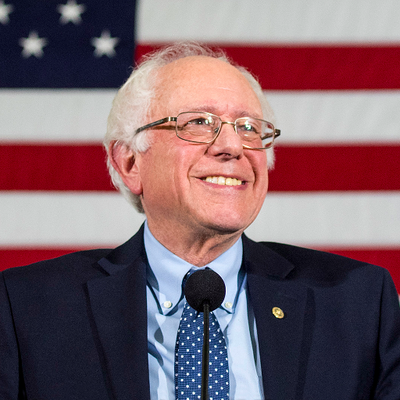 Bernie Sanders
U.S. Senator from Vermont
Bernie Sanders
U.S. Senator from Vermont