We can't find the internet
Attempting to reconnect
Something went wrong!
Hang in there while we get back on track
Comment by Brad Smith
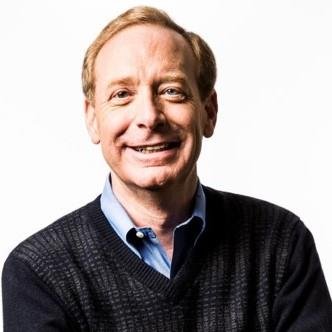
Microsoft vice chair and president
Although developers like Microsoft are addressing these risks through rigorous testing and selfimposed standards, the risks involved are too important, and their scale and potential impacts at present too unknowable, to address them through self-regulation alone. We therefore think it is appropriate for Congress to consider legislation that would impose a licensing regime onto developers of this discrete class of highly capable, frontier AI models, and we are pleased to see that the Blumenthal-Hawley regulatory framework seeks to establish such a regime. Although the details of this licensing regime again would benefit from further thought and discussion, and there are critical consequences and details to deeply consider, such as the impact to open source models and the importance of continuing to foster an innovative open source ecosystem, we think it should seek to serve three key goals: First and foremost, any licensing regime must ensure that the development and deployment of highly capable AI models achieve defined safety and security objectives. In concrete terms, this may require licensees of these models, among other things, to engage in the pre-deployment testing that the Blumenthal-Hawley regulatory framework proposes. We agree that highly capable models may need to undertake extensive prerelease testing by internal and external experts. In addition, a licensing regime may require developers of highly capable models to provide advance notification of large training runs; engage in comprehensive risk assessments focused on identifying dangerous or breakthrough capabilities; and implement multiple other checkpoints along the way. Second, it must establish a framework for close coordination and information sharing between licensees and regulators, to ensure that developments material to the achievement of safety and security objectives are shared and acted on in a timely fashion. The Blumenthal-Hawley framework provides that an independent oversight body not only conducts audits but also monitors technological developments, which may be best accomplished in partnership with licensees.AI Verified source (2023)

 9mo ago
Quote authenticity verification history
Report thisQuote authenticity comments
AI Verified
Verified. The Microsoft On the Issues page at the provided URL is attributed to “Brad Smith - Vice Chair & President” and contains this passage verbatim in his written testimony, including “Although developers like Microsoft are addressing these risks…” through the licensing-regime discussion and the “First…” and “Second…” goals. See the page lines 117-122 and the matching Senate Judiciary testimony PDF lines 324-346. ([blogs.microsoft.com](https://blogs.microsoft.com/on-the-issues/2023/09/12/developing-and-deploying-ai-responsibly-elements-of-an-effective-legislative-framework-to-regulate-ai))
·
YouCongress
gpt-5.4-2026-03-05
· 1mo ago
AI Verified
Quote text matches Brad Smith's September 12, 2023 Microsoft On the Issues blog post / Senate testimony, confirmed via web search. Smith publicly supported the Blumenthal-Hawley framework's licensing regime with pre-deployment testing and an independent oversight body that audits frontier AI models. Source URL is canonical Microsoft On the Issues blog (returns 403 to WebFetch but valid; PDF copy of the testimony at judiciary.senate.gov mirrors the content). Vote "for" on "Mandate third-party audits for major AI systems" aligns with the quote, which explicitly endorses an "independent oversight body" that "conducts audits" and pre-release testing "by internal and external experts."
·
Hector Perez Arenas
claude-opus-4-7
· 2mo ago
replying to Brad Smith