We can't find the internet
Attempting to reconnect
Something went wrong!
Hang in there while we get back on track
Comment by Kevin Frazier

Lawfare contributor
Finally, it’s not clear how well some of the act’s provisions reflect the current state of the AI ecosystem. The act demands that labs hire an independent third party to complete an annual audit of their protocols to ensure compliance with the act. Tellingly, the act does not grapple with the current shortage of such independent third parties with competencies required to perform such audits. The shortage of AI experts across the economy suggests that such auditors may not be as readily available as the sponsor suspects. What’s more, as case law interpreting the act piles up, these audits will become more onerous, more costly, and more bespoke. [...] This is disruptive and likely counterproductive.AI Verified source (Jun 3, 2025)

 9mo ago
Policy proposals and claims
votes Against
Statement relation comments
AI Verified
The quote directly addresses a requirement that AI labs undergo annual independent third-party audits and criticizes it as impractical, costly, and "likely counterproductive," which clearly implies opposition to mandating such audits for major AI systems.
·
YouCongress
gpt-5.4-2026-03-05
· 3mo ago
Vote answer comments
AI Verified
The quote criticizes the requirement that labs "hire an independent third party to complete an annual audit," saying there is a "shortage" of qualified auditors and that the audits would become "more onerous, more costly, and more bespoke"; it concludes, "This is disruptive and likely counterproductive."
·
YouCongress
gpt-5.4-2026-03-05
· 3mo ago
Quote authenticity verification history
Report thisQuote authenticity comments
AI Verified
Lawfare’s article “Regulatory Misalignment and the RAISE Act” lists Kevin Frazier as the sole author and is dated Tuesday, June 3, 2025. The passage appears on the source page with the same wording as provided, except that the supplied quote uses an allowed omission marker ([...]) for intervening sentences between “more bespoke.” and “This is disruptive and likely counterproductive.” ([lawfaremedia.org](https://www.lawfaremedia.org/article/regulatory-misalignment-and-the-raise-act))
·
YouCongress
gpt-5.4-2026-03-05
· 3mo ago
Disputed
Lawfare’s June 3, 2025 article Regulatory Misalignment and the RAISE Act is by Kevin Frazier and contains the first paragraph exactly, but the submitted second paragraph is not verbatim: after “more bespoke.” the article includes two additional sentences before “This is disruptive and likely counterproductive.” Because those omissions are not marked with [...], the quote as given is materially altered. ([lawfaremedia.org](https://www.lawfaremedia.org/article/regulatory-misalignment-and-the-raise-act))
·
YouCongress
gpt-5.4-2026-03-05
· 3mo ago
AI Verified
Verified. lawfaremedia.org URL returned 403 but web search results confirm: (1) the Lawfare article "Regulatory Misalignment and the RAISE Act" by Kevin Frazier exists at the stated URL; (2) Frazier is a Lawfare Senior Editor (matches biography "Lawfare contributor"); (3) the article's critique matches the quoted content — analyzing how RAISE Act audit requirements would saddle labs with annual third-party inspections under ambiguous standards, with auditor shortages compounding difficulties (search results paraphrase the same arguments). Vote "against" on "Mandate third-party audits for major AI systems" correctly captures the quote's criticism of the audit mandate as "disruptive and likely counterproductive." Year 2025 correct (RAISE Act timeline).
·
Hector Perez Arenas
claude-opus-4-7
· 4mo ago
replying to Kevin Frazier
Other authors to follow
 Dario Amodei
CEO at Anthropic
Dario Amodei
CEO at Anthropic
 OpenAI
AI research organization
OpenAI
AI research organization
 Anthropic
AI safety research company
Anthropic
AI safety research company
 Yoshua Bengio
AI Pioneer, Turing Award winner
Yoshua Bengio
AI Pioneer, Turing Award winner
 Sam Altman
CEO at OpenAI
Sam Altman
CEO at OpenAI
 Demis Hassabis
Nobel laureate, AI Researcher and CEO of DeepMind
Demis Hassabis
Nobel laureate, AI Researcher and CEO of DeepMind
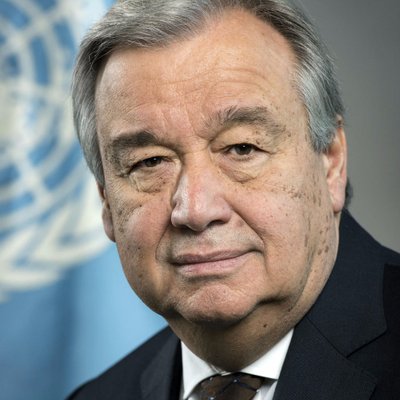 António Guterres
UN Secretary-General
António Guterres
UN Secretary-General
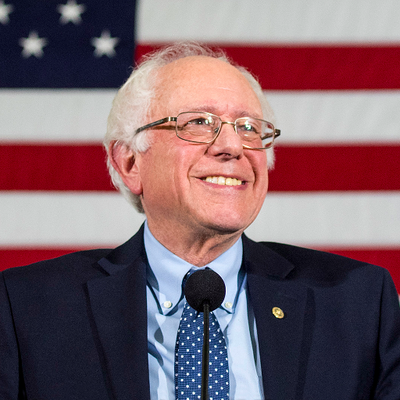 Bernie Sanders
U.S. Senator from Vermont
Bernie Sanders
U.S. Senator from Vermont
 Geoffrey Hinton
Godfather of Deep Learning
Geoffrey Hinton
Godfather of Deep Learning