
Ramez Naam
votes Against
We should adopt AI 2040 Plan A


 added 1mo ago
We can't find the internet
Attempting to reconnect
Something went wrong!
Hang in there while we get back on track
We can see this more directly. There are already entities with vastly greater than human intelligence working on the problem of augmenting their own intelligence. A great many, in fact. We call them corporations. And while we may have a variety of thoughts about them, not one has achieved transcendence. Let’s focus on as a very particular example: The Intel Corporation. Intel is my favorite example because it uses the collective brainpower of tens of thousands of humans and probably millions of CPU cores to.. design better CPUs! (And also to create better software for designing CPUs.) Those better CPUs will run the better software to make the better next generation of CPUs. Yet that feedback loop has not led to a hard takeoff scenario. It has helped drive Moore’s Law, which is impressive enough. But the time period for doublings seems to have remained roughly constant. Again, let’s not underestimate how awesome that is. But it’s not a sudden transcendence scenario. It’s neither a FOOM nor an event horizon.AI Verified source (2015)
8mo ago
added 1mo ago
These proposals violate at minimum the spirit of the 1st and 4th Amendments. This is well intentioned, from people who sincerely believe that runaway AI is a greater risk than, say, China’s oppression of millions of people today, or the ideologies th...more AI Verified source (Jul 11, 2026)
added 2mo ago
 OpenAI
AI research organization
OpenAI
AI research organization
 Dario Amodei
CEO at Anthropic
Dario Amodei
CEO at Anthropic
 Anthropic
AI safety research company
Anthropic
AI safety research company
 Yoshua Bengio
AI Pioneer, Turing Award winner
Yoshua Bengio
AI Pioneer, Turing Award winner
 Demis Hassabis
Nobel laureate, AI Researcher and CEO of DeepMind
Demis Hassabis
Nobel laureate, AI Researcher and CEO of DeepMind
 Sam Altman
CEO at OpenAI
Sam Altman
CEO at OpenAI
 Geoffrey Hinton
Godfather of Deep Learning
Geoffrey Hinton
Godfather of Deep Learning
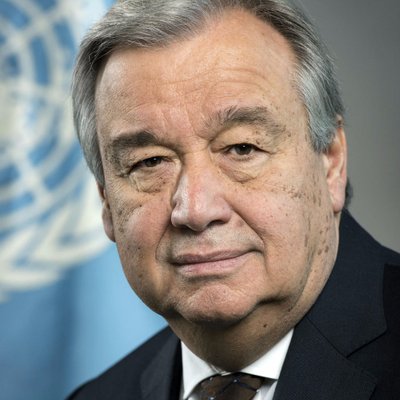 António Guterres
UN Secretary-General
António Guterres
UN Secretary-General
 Pope Leo XIV
Head of the Catholic Church
Pope Leo XIV
Head of the Catholic Church