We can't find the internet
Attempting to reconnect
Something went wrong!
Hang in there while we get back on track
Marvin Minsky

I am this person!
 Delegate
Choose a list of delegates
to vote as the majority of them.
Unless you vote directly.
ai (2)
ai-ethics (2)
agi (1)
ai-governance (1)
ai-policy (1)
ai-regulation (1)
ai-safety (1)
existential-risk (1)
future (1)
policy (1)
research-policy (1)
Top
New
-
 Marvin Minsky
votes Against
and says:
Marvin Minsky
votes Against
and says:
Does this mean that machines will replace us? I don't feel that it makes much sense to think in terms of "us" and "them." I much prefer the attitude of Hans Moravec of Carnegie-Mellon University, who suggests that we think of those future intelligent...
more Unverifiable source (Oct 1994)

 added 11mo ago
-
Marvin Minsky
votes For
and says:
Does this mean that machines will replace us? I don't feel that it makes much sense to think in terms of "us" and "them." I much prefer the attitude of Hans Moravec of Carnegie-Mellon University, who suggests that we think of those future intelligent...
more AI Verified source (Oct 1994)
added 11mo ago
Other authors to follow
 OpenAI
AI research organization
OpenAI
AI research organization
 Dario Amodei
CEO at Anthropic
Dario Amodei
CEO at Anthropic
 Anthropic
AI safety research company
Anthropic
AI safety research company
 Sam Altman
CEO at OpenAI
Sam Altman
CEO at OpenAI
 Yoshua Bengio
AI Pioneer, Turing Award winner
Yoshua Bengio
AI Pioneer, Turing Award winner
 Demis Hassabis
Nobel laureate, AI Researcher and CEO of DeepMind
Demis Hassabis
Nobel laureate, AI Researcher and CEO of DeepMind
 Scott Alexander
Author and psychiatrist
Scott Alexander
Author and psychiatrist
 António Guterres
UN Secretary-General
António Guterres
UN Secretary-General
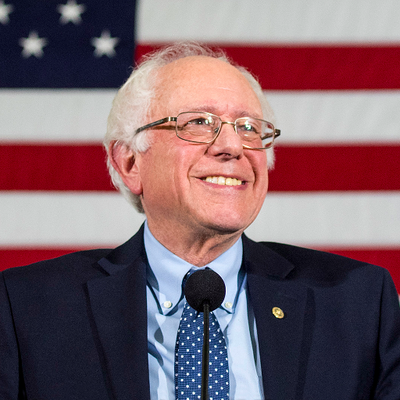 Bernie Sanders
U.S. Senator from Vermont
Bernie Sanders
U.S. Senator from Vermont