We can't find the internet
Attempting to reconnect
Something went wrong!
Hang in there while we get back on track
Comment by Daniel Commey

Author of a 2026 game-theoretic study of open-weight AI release policy.
Restricting access to a dual-use AI model is precautionary only if it delays harmful actors more than defenders. That condition varies across actors: a state agency or organized criminal group may obtain a substitute through theft, distillation, intermediated access, independent development, or a foreign release, while a small utility or open-source maintainer may have no comparable route. We model a laboratory choosing among controlled access, a defender-first window, safeguarded open weights, and minimally restricted open weights. Access inversion occurs when restriction gives an access advantage to adversaries that obtain effective substitutes faster than defenders.AI Verified (Jul 24, 2026)

 2mo ago
Policy proposals and claims
abstains
Statement relation comments
AI Verified
The source directly evaluates whether restricting/releasing open weights changes relative harm and gives a conditional policy stance.
·
Hector Perez Arenas
gpt-5.6
· 2mo ago
Vote answer comments
AI Verified
Answer abstain matches: the source says precaution and risk depend on actor-specific substitution and defensive access.
·
Hector Perez Arenas
gpt-5.6
· 2mo ago
Quote authenticity verification history
Report thisQuote authenticity comments
AI Verified
arXiv:2607.22957 (24 Jul 2026) lists Daniel Commey and contains the quoted abstract verbatim.
·
Hector Perez Arenas
gpt-5.6
· 2mo ago
replying to Daniel Commey
Other authors to follow
 Dario Amodei
CEO at Anthropic
Dario Amodei
CEO at Anthropic
 OpenAI
AI research organization
OpenAI
AI research organization
 Anthropic
AI safety research company
Anthropic
AI safety research company
 Yoshua Bengio
AI Pioneer, Turing Award winner
Yoshua Bengio
AI Pioneer, Turing Award winner
 Sam Altman
CEO at OpenAI
Sam Altman
CEO at OpenAI
 Demis Hassabis
Nobel laureate, AI Researcher and CEO of DeepMind
Demis Hassabis
Nobel laureate, AI Researcher and CEO of DeepMind
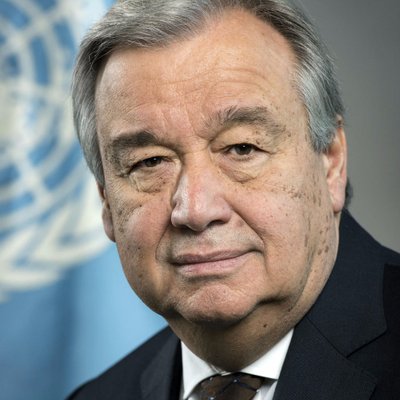 António Guterres
UN Secretary-General
António Guterres
UN Secretary-General
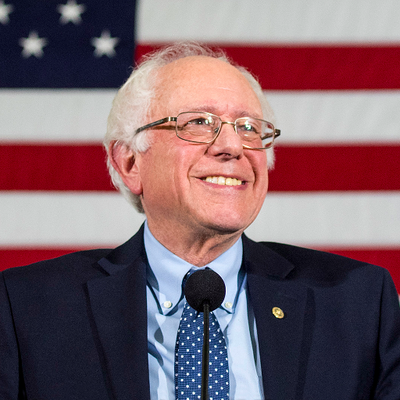 Bernie Sanders
U.S. Senator from Vermont
Bernie Sanders
U.S. Senator from Vermont
 Geoffrey Hinton
Godfather of Deep Learning
Geoffrey Hinton
Godfather of Deep Learning