We can't find the internet
Attempting to reconnect
Something went wrong!
Hang in there while we get back on track
Comment by James J. Shinn

Former U.S. Assistant Secretary of Defense for Asian and Pacific Security Affairs and national-security policy expert.
Pursuing AI dominance will provoke intense sabotage efforts by rivals. The US and China have clear incentives to race each other to greater AI capabilities; sole access to a sufficiently powerful AI system could give the country that developed it geopolitical hegemony. But MAIM says that any country trying to build such an AI system will inevitably run into a rival determined to disable that project before it can succeed. That rival will use strategies including spying, cyber-sabotage, corrupting the model’s weights, attacking the power and cooling systems of data centers, or, in the worst case, physically striking data centers. [...] Formalizing deterrence dynamics can stabilize the geopolitical situation. [...] Similarly, the MAIM approach needs its own formalized structure: clear rules for how conflicts might escalate, selective transparency around the capacity of data centers and what they are being used for, AI-assisted inspections, and an agreement not to harden infrastructure to an extent that might invite a preemptive strike.Unverified (Sep 24, 2026)

 56min ago
Policy proposals and claims
votes For
No statement relation verification comments yet.
No vote answer verification comments yet.
replying to James J. Shinn
Other authors to follow
 OpenAI
AI research organization
OpenAI
AI research organization
 Dario Amodei
CEO at Anthropic
Dario Amodei
CEO at Anthropic
 Anthropic
AI safety research company
Anthropic
AI safety research company
 Yoshua Bengio
AI Pioneer, Turing Award winner
Yoshua Bengio
AI Pioneer, Turing Award winner
 Sam Altman
CEO at OpenAI
Sam Altman
CEO at OpenAI
 Demis Hassabis
Nobel laureate, AI Researcher and CEO of DeepMind
Demis Hassabis
Nobel laureate, AI Researcher and CEO of DeepMind
 Geoffrey Hinton
Godfather of Deep Learning
Geoffrey Hinton
Godfather of Deep Learning
 António Guterres
UN Secretary-General
António Guterres
UN Secretary-General
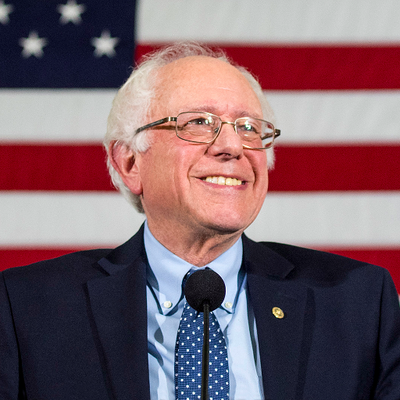 Bernie Sanders
U.S. Senator from Vermont
Bernie Sanders
U.S. Senator from Vermont