We can't find the internet
Attempting to reconnect
Something went wrong!
Hang in there while we get back on track
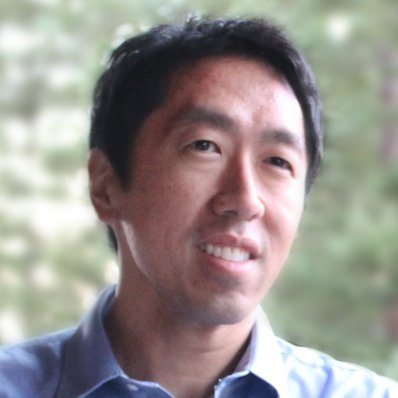 Andrew Ng


I am this person!
 Delegate
Choose a list of delegates
to vote as the majority of them.
Unless you vote directly.
Baidu; Stanford CS faculty; founded Coursera and Google Brain
I am this person!
Location: United States
ai-regulation (13)
ai-governance (11)
ai-safety (11)
policy (11)
regulations (8)
ai-policy (7)
research-policy (6)
ai (5)
ai-ethics (4)
open-source (4)
transparency (4)
ai-risk (3)
ethics (3)
economics (2)
existential-risk (2)
Top
New
-
Andrew Ng
votes Against
and says:
If I were to try to give one prescription, it would be to promote openness, because AI is amazing technology and I want it to be in everyone’s hands.
AI Verified source (Aug 12, 2026)
 added 1mo ago
-
Andrew Ng
votes Against
and says:
They tried to pass laws to stifle [free open-source AI software]. ... After that narrative lost credibility, and our government no longer believes that, thank God, the same people said, “Oh, AI could create bioweapons.” After the RAND and other studi...
more AI Verified source (Aug 5, 2026)
added 26d ago
-
Andrew Ng
votes For
and says:
If every developer becomes 10x more productive, I don't think we’ll end up with 1/10th as many developers, because the demand for custom software has no practical ceiling. Instead, the number of people who develop software will grow massively.
AI Verified source (Feb 20, 2026) 1 of 2
added 2mo ago
-
Andrew Ng
votes Against
and says:
Instead, the number of people who develop software will grow massively.
AI Verified source (Feb 20, 2026)
added 2mo ago
-
States should retain the right to set stricter AI safety standards than the federal government
130 opinions
Andrew Ng
votes Against
and says:
I'm disappointed [the Big Beautiful Bill] didn't include a proposed moratorium on U.S. state-level AI regulation. While there is a role for AI regulation, it is when the technology is new and poorly understood that lobbyists are most likely to succee...
more AI Verified source (2026)
added 5mo ago
-
Andrew Ng
votes For
and says:
I hope that we will reach AGI and ASI superintelligence someday, maybe within our lifetimes, maybe within the next few decades or hundreds of years, we’ll see how long it takes. Even AI has to obey the laws of physics, so I think physics will place l...
more Unverifiable source (2025)
added 11mo ago
-
Andrew Ng
votes Against
and says:
SB 1047 will stifle open source AI and hinder AI innovation [...] and therefore will make AI less safe.
Unverifiable source (2024)
added 7mo ago
-
Mandate reporting of AI training runs above 10²⁶ FLOPs to a designated national or international authority
33 opinions
Andrew Ng
votes Against
and says:
However, it is important to differentiate regulating applications (which we need) vs. regulating the technology (which is ill-advised).
AI Verified source (Dec 11, 2023)
added 6mo ago
-
Andrew Ng
votes Against
and says:
However, it is important to differentiate regulating applications (which we need) vs. regulating the technology (which is ill-advised).
AI Verified source (Dec 11, 2023)
added 6mo ago
-
Andrew Ng
votes Against
and says:
However, it is important to differentiate regulating applications (which we need) vs. regulating the technology (which is ill-advised).
AI Verified source (Dec 11, 2023)
added 6mo ago
-
Andrew Ng
votes Against
and says:
However, it is important to differentiate regulating applications (which we need) vs. regulating the technology (which is ill-advised).
AI Verified source (Dec 11, 2023)
added 6mo ago
-
Andrew Ng
votes Against
and says:
However, it is important to differentiate regulating applications (which we need) vs. regulating the technology (which is ill-advised).
AI Verified source (Dec 11, 2023)
added 6mo ago
-
Pausing AI at human-genius level to solve alignment is safer than either racing to superintelligence or halting entirely
114 opinions
Andrew Ng
votes Against
and says:
But the idea of asking AI labs to slow down just doesn't seem practical or implementable to me. Especially in this frankly competitive business environment with labs and countries trying to build advanced technologies and creating a lot of value. And...
more AI Verified source (Apr 9, 2023)
added 3mo ago
-
Andrew Ng
votes Against
and says:
But the idea of asking AI labs to slow down just doesn't seem practical or implementable to me. Especially in this frankly competitive business environment with labs and countries trying to build advanced technologies and creating a lot of value. And...
more AI Verified source (Apr 9, 2023)
added 3mo ago
-
Andrew Ng
votes Against
and says:
I have to admit, I don’t get it, [...] I’m struggling to see how AI could pose any meaningful risk for our extinction.
AI Verified source (2023) 1 of 2
added 7mo ago
Other authors to follow
 OpenAI
AI research organization
OpenAI
AI research organization
 Dario Amodei
CEO at Anthropic
Dario Amodei
CEO at Anthropic
 Anthropic
AI safety research company
Anthropic
AI safety research company
 Sam Altman
CEO at OpenAI
Sam Altman
CEO at OpenAI
 Yoshua Bengio
AI Pioneer, Turing Award winner
Yoshua Bengio
AI Pioneer, Turing Award winner
 Demis Hassabis
Nobel laureate, AI Researcher and CEO of DeepMind
Demis Hassabis
Nobel laureate, AI Researcher and CEO of DeepMind
 Scott Alexander
Author and psychiatrist
Scott Alexander
Author and psychiatrist
 António Guterres
UN Secretary-General
António Guterres
UN Secretary-General
 Bernie Sanders
U.S. Senator from Vermont
Bernie Sanders
U.S. Senator from Vermont