We can't find the internet
Attempting to reconnect
Something went wrong!
Hang in there while we get back on track
Mandate disclosure of AI-generated political advertising
Share this with your representatives, journalists and friends
Cast your vote:
Results (88 votes):
Total
(88 votes)
For 79 (90%)
Abstain 0 (0%)
Against 9 (10%)
·
For (79)
-
 AI Transparency in Elections Act of 2026 (H.R. 9922)Named U.S. federal legislative proposal introduced in 2026 requiring disclosures for AI-generated content in political advertisements.votes For and says:
To amend the Federal Election Campaign Act of 1971 to provide further transparency for the use of content that is substantially generated by artificial intelligence in political advertisements by requiring such advertisements to include a statement w...
more AI Verified source (Jul 23, 2026)

 added 4d ago
Delegate
added 4d ago
Delegate Choose a list of delegatesto vote as the majority of them.Unless you vote directly.
 -
Joseph MorelleU.S. Representative, New Yorkvotes For and says:
When a person makes a disbursement for the purpose of financing a covered communication containing an image, audio, or video that was substantially generated by artificial intelligence, the covered communication shall include, in a clear and conspicu...
more AI Verified source (Jul 23, 2026)
added 23d ago
Delegate
Choose a list of delegatesto vote as the majority of them.Unless you vote directly. -
Mandie LandryLouisiana state representative and primary sponsor of the 2026 AI-in-political-campaigns law.votes For and says:
If you are able to prove that I did an AI video of you robbing a bank when you were running for office, and I didn’t have a disclosure, I could be fined and face up to two years in jail.
AI Verified source (Jul 13, 2026)
added 2mo ago
Delegate
Choose a list of delegatesto vote as the majority of them.Unless you vote directly. -
Keerat SharmaVice President and General Manager for Ads Privacy and Safety at Google.votes For and says:
And in 2023, we introduced a requirement to disclose synthetic or digitally altered content in election ads.
AI Verified source (Jul 9, 2026)
added 2mo ago
Delegate
Choose a list of delegatesto vote as the majority of them.Unless you vote directly. -
 Henna VirkkunenEU Technology Commissionervotes For and says:
Together, we can strengthen trust by ensuring that AI-generated content, including deepfakes and AI-generated texts on matters of public interest, is clearly identified and appropriately labelled.
AI Verified source (Jul 2026)
added 2mo ago
Delegate
Choose a list of delegatesto vote as the majority of them.Unless you vote directly. -
Sam LiccardoU.S. Representative from California's 16th congressional district.votes For and says:
The Spot the Fakes Act provides an essential tool in a much larger toolbox that we will need to empower American consumers to distinguish fact from AI fiction.
AI Verified source (Jul 1, 2026)
added 2mo ago
Delegate
Choose a list of delegatesto vote as the majority of them.Unless you vote directly. -
 Josh GottheimerU.S. Representative from New Jerseyvotes For and says:
Americans deserve to know if what they’re seeing, reading, or hearing was made by a machine. This is a commonsense, bipartisan fix — we’re simply requiring that AI content come with a built-in label, so platforms, journalists, and everyday people can...
more AI Verified source (Jul 1, 2026)
added 3mo ago
Delegate
Choose a list of delegatesto vote as the majority of them.Unless you vote directly. -
Tom Kean Jr.U.S. Representative from New Jersey.votes For and says:
As artificial intelligence becomes more sophisticated, identifying what’s real and what’s artificially generated has become a real challenge. The Spot the Fakes Act will bring much-needed transparency by ensuring AI-generated content can be clearly l...
more AI Verified source (Jul 1, 2026)
added 3mo ago
Delegate
Choose a list of delegatesto vote as the majority of them.Unless you vote directly. -
 Valerie FousheeU.S. Representative for North Carolina's 4th congressional district; sponsor of the Protecting Consumers from Deceptive AI Actvotes For and says:
Artificial intelligence is moving quickly, and Congress has a responsibility to meet this moment. My Protecting Consumers From Deceptive AI Act will help protect creators and creative work and ensure Americans know when they are viewing or interactin...
more AI Verified source (Jun 26, 2026) 1 of 2
added 3mo ago
Delegate
Choose a list of delegatesto vote as the majority of them.Unless you vote directly. -
Zali SteggallIndependent member of the Australian House of Representatives for Warringah.votes For and says:
The bills I've tabled will require AI content watermarking, establish an ethical political advertising code and an independent political advertising standards board to regulate complaints, and introduce penalties for misleading and deceptive politica...
more AI Verified source (Jun 25, 2026)
added 1mo ago
Delegate
Choose a list of delegatesto vote as the majority of them.Unless you vote directly. -
 John CurtisU.S. Senator from Utah; former U.S. Representative; member of the Senate Commerce Committeevotes For and says:
As AI-generated content becomes more refined and realistic, people deserve to know whether what they’re seeing is created by a human or generated by artificial intelligence.
AI Verified source (Jun 25, 2026)
added 2mo ago
Delegate
Choose a list of delegatesto vote as the majority of them.Unless you vote directly. -
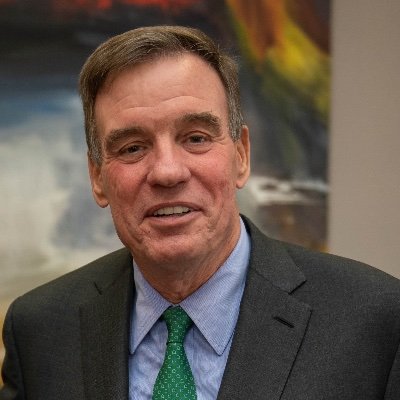 Mark WarnerU.S. Senator from Virginia; former Governor of Virginia; Vice Chairman of the Senate Intelligence Committeevotes For and says:
Jurisdictions around the globe are moving to adopt common-sense rules around labeling AI-generated content – it’s time for the U.S. to catch up and in fact lead the world with a disclosure and anti-circumvention model that should be the global standa...
more AI Verified source (Jun 25, 2026)
added 3mo ago
Delegate
Choose a list of delegatesto vote as the majority of them.Unless you vote directly. -
 Brian SchatzU.S. Senator (D–Hawaii)votes For and says:
People deserve to know whether the videos, photos, and content they see and read online are real or not. Our bill is simple – if any digital content is made by AI, it should be labeled so that people are aware and aren’t fooled or scammed.
AI Verified source (Jun 25, 2026)
added 3mo ago
Delegate
Choose a list of delegatesto vote as the majority of them.Unless you vote directly. -
Deborah BergaminiItalian parliamentarian and rapporteur at the Parliamentary Assembly of the Council of Europe on protecting democracy from disruptions caused by artificial intelligence.votes For and says:
The most dangerous content, deepfakes during elections or manipulated images of public figures, synthetic disinformation, needs mandatory watermarking and fact-checking, not voluntary best practice.
AI Verified source (Jun 24, 2026)
added 2mo ago
Delegate
Choose a list of delegatesto vote as the majority of them.Unless you vote directly. -
 European CommissionEU's executive bodyvotes For and says:
Deepfakes and AI-generated or AI-manipulated text published on matters of public interest must be clearly labelled.
AI Verified source (Jun 10, 2026)
added 3mo ago
Delegate
Choose a list of delegatesto vote as the majority of them.Unless you vote directly. -
Louisiana State LegislatureState legislature of Louisiana.votes For and says:
No person shall make or cause to be made any electioneering communication that portrays a candidate or an elected official subject to recall and that is, through the use of artificial intelligence, created, altered, or digitally manipulated in a mann...
more AI Verified source (Jun 9, 2026)
added 1mo ago
Delegate
Choose a list of delegatesto vote as the majority of them.Unless you vote directly. -
 OpenAIAI research organizationvotes For and says:
We support strong protections against image-based sexual abuse, including efforts to criminalize the distribution of synthetic non-consensual intimate imagery and strengthen remedies for victims. We also support election integrity protections related...
more AI Verified source (Jun 3, 2026)
added 2mo ago
Delegate
Choose a list of delegatesto vote as the majority of them.Unless you vote directly. -
The Political GroupU.S. political consulting and campaign-strategy firm.votes For and says:
Congress is moving to require clear disclosures whenever political advertisements use AI-generated content. Representative Yvette Clarke introduced legislation mandating that voters know when AI has been used to create or modify political messages th...
more AI Verified source (May 28, 2026)
added 1mo ago
Delegate
Choose a list of delegatesto vote as the majority of them.Unless you vote directly. -
Fair Political Practices CommissionCalifornia state agency that administers and enforces campaign finance, lobbying, and political ethics laws.votes For and says:
Staff proposes adoption of Regulation 18450.12 to add language clarifying the circumstances under which disclosure is required in campaign advisements that have been created or modified using AI, as well as amendments to Regulation 18401 to make expl...
more AI Verified source (May 14, 2026)
added 2mo ago
Delegate
Choose a list of delegatesto vote as the majority of them.Unless you vote directly. -
OpenXDigital advertising exchange and ad-tech company that publishes policies for political advertising.votes For and says:
If a Political Advertisement contains an image, video, or audio content that was substantially produced by generative artificial intelligence, the Political Advertisement must display, in legible writing, a disclosure stating “This content generated ...
more AI Verified source (May 4, 2026)
added 2mo ago
Delegate
Choose a list of delegatesto vote as the majority of them.Unless you vote directly. -
Tony EversGovernor of Wisconsin; advocates preserving state authority to protect communities from AI harms.votes For and says:
In March 2024, I enacted 2023 Wisconsin Act 123, which requires political candidates and political entities to plainly state when their advertisements are generated using AI to help ensure AI-generated content is not used by bad actors in political a...
more AI Verified source (May 1, 2026)
added 2mo ago
Delegate
Choose a list of delegatesto vote as the majority of them.Unless you vote directly. -
 Cynthia RudinDuke professor, interpretable ML advocatevotes For and says:
Generative AI can be used to create highly realistic content that is difficult or impossible to distinguish from authentic material, including deepfakes. We are not interested in being deceived, and we are not interested in our children being deceive...
more AI Verified source (Apr 24, 2026)
added 2mo ago
Delegate
Choose a list of delegatesto vote as the majority of them.Unless you vote directly. -
Ashley IrwinPresident of the Society of Composers and Lyricists.votes For and says:
A federal framework that requires disclosure of AI-generated audio content, backed by NIST technical standards and FTC enforcement, is an essential first step toward protecting the human creators whose work these systems are trained on and imitating....
more AI Verified source (Apr 24, 2026)
added 2mo ago
Delegate
Choose a list of delegatesto vote as the majority of them.Unless you vote directly. -
Nils SmithVice President of IEEE-USA.votes For and says:
IEEE-USA welcomes this legislation which thoughtfully addresses the need to protect consumers from the possible negative aspects of generative AI, including how a combination of technical standards and requirements can inform how companies may disclo...
more AI Verified source (Apr 24, 2026)
added 2mo ago
Delegate
Choose a list of delegatesto vote as the majority of them.Unless you vote directly. -
Adam BillenCo-Executive Director of Encode AI.votes For and says:
We appreciate Rep. Foushee’s thoughtful bill to address the concerning and pervasive problem of AI deepfakes. The Protecting Consumers from Deceptive AI Act would require clear labeling of AI-generated content so people can tell what’s real and what ...
more AI Verified source (Apr 24, 2026)
added 2mo ago
Delegate
Choose a list of delegatesto vote as the majority of them.Unless you vote directly. -
Vered HoreshChief AI Strategy Officer at Bria.votes For and says:
Bria supports efforts to establish clear labeling standards and real accountability for generative AI outputs. The Protecting Consumers from Deceptive AI Act addresses a basic but increasingly urgent need: businesses and consumers should be able to k...
more AI Verified source (Apr 24, 2026)
added 2mo ago
Delegate
Choose a list of delegatesto vote as the majority of them.Unless you vote directly. -
Mary RasenbergerAuthors Guild CEOvotes For and says:
The Authors Guild strongly supports Representative Foushee’s Protecting Consumers from Deceptive AI Act. While we’ve developed a Human Authored certification mark, clear labeling of AI-generated content is the more effective solution. This bill requi...
more AI Verified source (Apr 24, 2026)
added 2mo ago
Delegate
Choose a list of delegatesto vote as the majority of them.Unless you vote directly. -
James SilverbergChief Executive Officer of the American Society for Collective Rights Licensing.votes For and says:
ASCRL believes the bill would give platforms an incentive to license visual author materials, possibly to avoid or to help them comply with the identification and provenance requirements. It is a helpful step towards the broader task of ensuring that...
more AI Verified source (Apr 24, 2026)
added 2mo ago
Delegate
Choose a list of delegatesto vote as the majority of them.Unless you vote directly. -
Jace JohnsonVice President of Global Public Policy at Adobe.votes For and says:
As longtime advocates for content provenance, Adobe supports this bill’s balanced approach that recognizes the shared responsibility of generative AI developers and digital platforms to provide people with meaningful context about the content they en...
more AI Verified source (Apr 24, 2026)
added 2mo ago
Delegate
Choose a list of delegatesto vote as the majority of them.Unless you vote directly. -
James MoylanU.S. House Delegate for Guamvotes For and says:
Artificial intelligence is advancing rapidly, and while innovation brings tremendous opportunity, it also comes with real responsibility. Americans deserve transparency when AI-generated content is being used to influence, persuade, or deceive. This ...
more AI Verified source (Apr 24, 2026)
added 2mo ago
Delegate
Choose a list of delegatesto vote as the majority of them.Unless you vote directly.
Loading more opinions...
Abstain (0)
Loading more opinions...
Against (9)
Loading more opinions...