We can't find the internet
Attempting to reconnect
Something went wrong!
Hang in there while we get back on track
Expert opinions on FLF Epistack
Sourced quotes, claims, policy proposals and stances on FLF Epistack from AI researchers, executives and policymakers.
1595 sourced quotes · 8 policy proposals and claims
Quote date
Added
-
For (36)
 Michael MillerCardiologist at Penn Medicinevotes For and says:
The new study's results aren't generalizable to people with high cholesterol. For instance, eggs can raise LDL levels if you have familial hypercholesterolemia.
AI Verified source (Jun 15, 2026)

 added 3mo ago
Delegate
added 3mo ago
Delegate Choose a list of delegatesto vote as the majority of them.Unless you vote directly.Abstain (8)
Asfia FatimaChief dietitian at Clearcalsabstains and says:
Choose a list of delegatesto vote as the majority of them.Unless you vote directly.Abstain (8)
Asfia FatimaChief dietitian at Clearcalsabstains and says:People with Familial Hypercholesterolemia (FH): FH is a genetic condition that impairs the liver's ability to regulate cholesterol. People with FH cannot compensate effectively for dietary cholesterol intake, so eggs do raise LDL in this population m...
more AI Verified source (May 14, 2026)
added 3mo ago
Delegate
Choose a list of delegatesto vote as the majority of them.Unless you vote directly.Against (171)
Heart Foundation New ZealandNational Heart Foundation of New Zealand guidance publisher on heart-healthy eating and cardiovascular preventionvotes Against and says:While egg yolks are high in cholesterol, it is saturated fatty acids that have a greater effect on our blood cholesterol levels.
AI Verified source (Jul 13, 2026)
added 3mo ago
Delegate
Choose a list of delegatesto vote as the majority of them.Unless you vote directly. -
For (196)
Heart Foundation New ZealandNational Heart Foundation of New Zealand guidance publisher on heart-healthy eating and cardiovascular preventionvotes For and says:
For the general healthy population, eggs can be included as part of a heart-healthy eating pattern.
AI Verified source (Jul 13, 2026)
added 3mo ago
Delegate
Choose a list of delegatesto vote as the majority of them.Unless you vote directly.Abstain (8)
Yoshimi KishimotoSetsunan University nutrition researcherabstains and says:In Japan, a large cohort study published in 2006 showed that daily or nearly daily egg consumption did not increase the incidence of coronary heart disease. Conversely, a recent US study associated high egg consumption with increased cardiovascular d...
more AI Verified source (Feb 25, 2026)
added 3mo ago
Delegate
Choose a list of delegatesto vote as the majority of them.Unless you vote directly.Against (13) Physicians Committee for Responsible MedicinePhysician-led nonprofit advocacy groupvotes Against and says:
When it came to eggs, each half egg caused a 6% and 8% increased risk, respectively.
AI Verified source (Jun 8, 2026)
added 3mo ago
Delegate
Choose a list of delegatesto vote as the majority of them.Unless you vote directly. -
Genetic variation (e.g. hyper-responders) makes population-level egg advice misleading for individuals
134 opinions
For (132)
Laurie AllenRegistered dietitian and associate professor at the University of North Carolina Greensboro.votes For and says:Some people have familial hypercholesterolemia, a condition that genetically predisposes them to elevated cholesterol levels. This increases your sensitivity to dietary cholesterol, which is found in eggs. In this case, it’s often recommended to limi...
more AI Verified source (Jul 11, 2026)
added 3mo ago
Delegate
Choose a list of delegatesto vote as the majority of them.Unless you vote directly.Against (3) Michael Gregernutrition physician and bestselling authorvotes Against and says:
For most people, in most situations, we are more similar than different. [...] there is currently insufficient evidence to support truly personalized nutrition for most people.
AI Verified source (Mar 3, 2026)
added 3mo ago
Delegate
Choose a list of delegatesto vote as the majority of them.Unless you vote directly. -
The Large Hadron Collider (LHC) poses no credible risk of destroying Earth by creating a microscopic black hole
182 opinions
For (177)
Times of IndiaIndian news outlet that in July 2026 described CERN black-hole conspiracy claims as sensational internet conspiracies rather than real risk.votes For and says:Despite years of sensational internet conspiracies suggesting it could create black holes or portals, the shutdown is simply routine.
AI Verified source (Jul 11, 2026)
added 3mo ago
Delegate
Choose a list of delegatesto vote as the majority of them.Unless you vote directly.Abstain (1)
Eric E. JohnsonLegal scholar and former University of North Dakota law professor who analyzed LHC catastrophe-risk litigation.abstains and says:Scientists’ conclusions about risk cannot be taken at face value. Their assurances must be discounted by the probability of their own error. [...] It does not follow that LHC risk is zero: An accurate assessment of risk must include the possibility t...
more AI Verified source (2009)
added 3mo ago
Delegate
Choose a list of delegatesto vote as the majority of them.Unless you vote directly.Against (4)
Otto E. RösslerGerman chemist and chaos theorist associated with the University of Tübingen who publicly warned about LHC black-hole risks.votes Against and says:Black holes DO NOT EVAPORATE — hence they can only grow. [...] Inside matter, a resident black hole will not grow linerally but rather — via self-organization — form a so-called “miniquasar”: an electro-gravitational engine that grows exponentially, ...
more AI Verified source (Jan 30, 2011)
added 3mo ago
Delegate
Choose a list of delegatesto vote as the majority of them.Unless you vote directly. -
For (67)
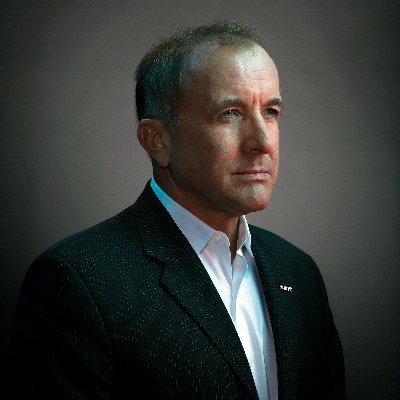 Michael ShermerSkeptic founder; science writer and columnistvotes For and says:
This is still a viable conspiracy theory that could be true. As far as I'm concerned, it's more likely to be true than the wet market origins. So, I think that's why, again during COVID, what I would have liked to see is our public policymakers and p...
more AI Verified source (Jul 9, 2026)
added 3mo ago
Delegate
Choose a list of delegatesto vote as the majority of them.Unless you vote directly.Abstain (6)
Christian HappiGenomics researcher and coauthor of the 2026 Nature commentary on COVID-19 originsabstains and says:In the 78-page document, we determined that most of the peer-reviewed scientific evidence supports the hypothesis that SARS-CoV-2 has a zoonotic origin, meaning that it came from an animal.
Unverified source (Feb 24, 2026)
added 3mo ago
Delegate
Choose a list of delegatesto vote as the majority of them.Unless you vote directly.Against (68)
Daniel EngberScience journalist and senior editor at The Atlanticvotes Against and says:The origins of the coronavirus pandemic remain contested; the evidence is incomplete.
AI Verified source (Jul 7, 2026)
added 3mo ago
Delegate
Choose a list of delegatesto vote as the majority of them.Unless you vote directly. -
For (142)
Michael ShermerSkeptic founder; science writer and columnistvotes For and says:
This is still a viable conspiracy theory that could be true. As far as I'm concerned, it's more likely to be true than the wet market origins. So, I think that's why, again during COVID, what I would have liked to see is our public policymakers and p...
more AI Verified source (Jul 9, 2026)
added 3mo ago
Delegate
Choose a list of delegatesto vote as the majority of them.Unless you vote directly.Abstain (108)
Daniel EngberScience journalist and senior editor at The Atlanticabstains and says:The origins of the coronavirus pandemic remain contested; the evidence is incomplete.
AI Verified source (Jul 7, 2026)
added 3mo ago
Delegate
Choose a list of delegatesto vote as the majority of them.Unless you vote directly.Against (177)
Elizabeth GinexiResearcher and writer on science policy, ethics, and NIH-related issuesvotes Against and says:The majority of virologists and epidemiologists who have examined the question conclude that the available evidence favors a natural spillover origin. No credible evidence links NIH-funded research to the emergence of SARS-CoV-2.
AI Verified source (Jul 2, 2026)
added 3mo ago
Delegate
Choose a list of delegatesto vote as the majority of them.Unless you vote directly. -
For (132)
Juan LamaMolecular virologist and Chief Scientific Officer at RetroVirox Inc.votes For and says:
For context, the majority of virologists support the hypothesis that SARS-CoV-2 originated from a zoonotic spillover event that occurred in the vicinity of a wet market in Wuhan.
AI Verified source (Jun 2026)
added 3mo ago
Delegate
Choose a list of delegatesto vote as the majority of them.Unless you vote directly.Abstain (31)
Daniel EngberScience journalist and senior editor at The Atlanticabstains and says:The origins of the coronavirus pandemic remain contested; the evidence is incomplete.
AI Verified source (Jul 7, 2026)
added 3mo ago
Delegate
Choose a list of delegatesto vote as the majority of them.Unless you vote directly.Against (110)
Josh ChristensonNew York Post Washington correspondent covering politics and investigationsvotes Against and says:Dr. Anthony Fauci and other IC leaders “influenced” the CIA and others involved in COVID intelligence analyses to suppress evidence that the virus most likely resulted from a lab leak in China.
AI Verified source (Jul 2, 2026)
added 3mo ago
Delegate
Choose a list of delegatesto vote as the majority of them.Unless you vote directly. -
For (96)
I-Wen ChenLead author of a 2026 Frontiers in Nutrition study on observational nutrition evidence and confounding.votes For and says:
In this observational study, VDD was significantly associated with an increased risk of HNC, with consistency across subtypes and a dose-response gradient. However, the observational design precludes causal inference, and residual confounding cannot ...
more AI Verified source (Jul 4, 2026)
added 3mo ago
Delegate
Choose a list of delegatesto vote as the majority of them.Unless you vote directly.Against (4)
Samuel J. DickenNutrition researchervotes Against and says:This includes the largely observational evidence base, and with it, unmeasured confounding and determining causality (or ruling out reverse causality).
AI Verified source (May 25, 2026)
added 3mo ago
Delegate
Choose a list of delegatesto vote as the majority of them.Unless you vote directly.